
When a flatbed is the right truck
A flatbed is never the wrong choice for a passenger vehicle. It is the necessary choice when spinning the wheels or dragging the car could cause damage:
| Your vehicle | Flatbed? | Why |
|---|---|---|
| All-wheel drive (most Subarus, many SUVs and crossovers) | Yes | Makers say tow with all four wheels off the ground; turning only one axle can strain the center differential. |
| Four-wheel drive truck or SUV | Usually | Check the manual; many require all wheels up or the transfer case in neutral. |
| Electric or hybrid | Yes | Turning drive wheels can generate electricity and damage the motor or wiring. |
| Lowered, sports car, long front overhang | Yes | A wheel-lift can scrape bumpers and air dams. |
| Crash damage, locked wheel, broken axle | Yes | The car may not roll or steer. |
| Front-wheel-drive sedan with a simple breakdown | Either | A wheel-lift is usually fine for short trips. |
| Motorcycle | Yes | Ask for a flatbed with wheel chocks and soft straps. |
If you are not sure what drives your wheels, give the year, make and model when you call. The dispatcher can check.
How flatbed towing works
- The driver positions the truck and tilts the deck down to the ground.
- Your vehicle is winched up the deck. If it runs and steers, it may be driven on.
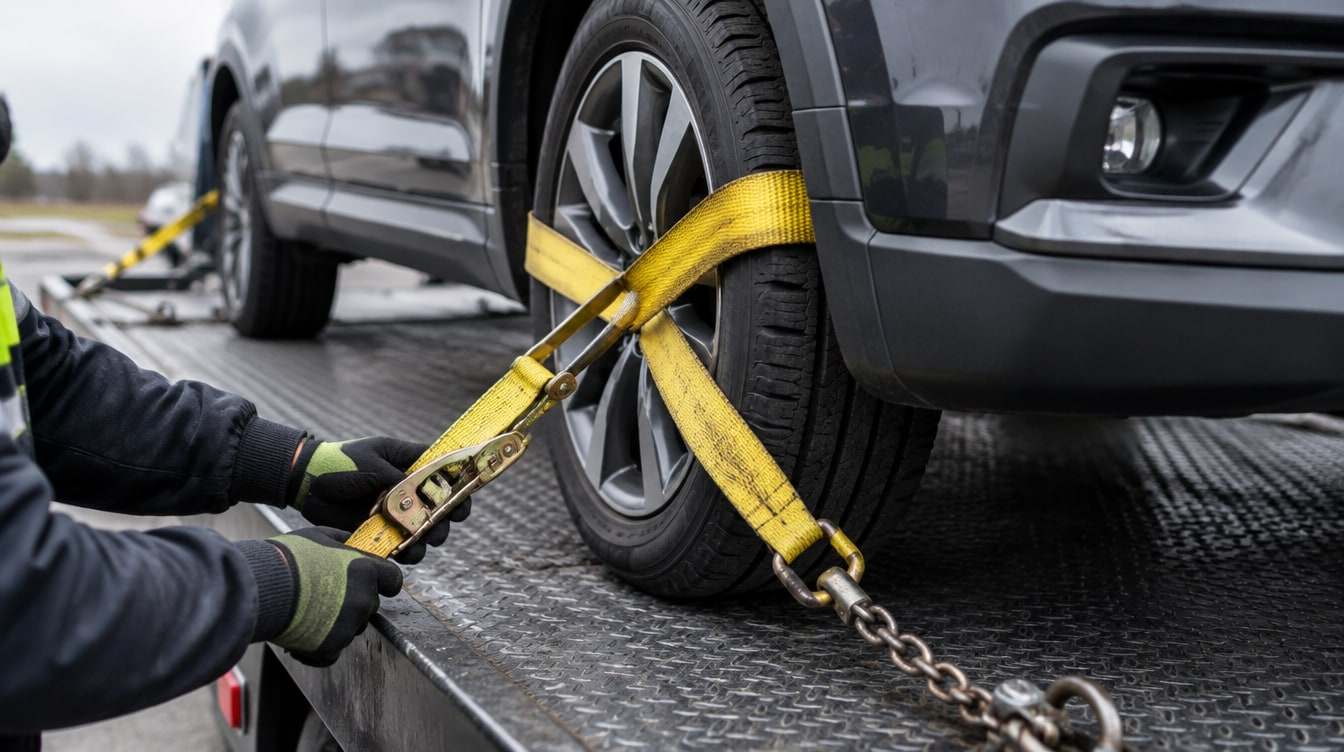
- Each wheel is strapped or chained to the deck, and the deck levels out.
- At the destination the deck tilts again and the car rolls or winches off.
Loading takes a few minutes on a quiet street. It takes longer on a narrow residential street in Ottawa Hills or a tight store lot, where the driver needs room behind the truck to lower the deck.
Flatbed tows from Toledo-area highways
On I-75, I-475 and I-280, a flatbed needs a long, flat stretch of shoulder to load safely, so the driver may ask you to describe where exactly you are: direction of travel, nearest exit and any mile marker. If the car is in a travel lane or anyone is hurt, call 911 first; Ohio law lets officers clear a blocking vehicle after a crash (ORC 4513.66).
On the Ohio Turnpike the rule is different: a disabled passenger car can only be towed off by a Turnpike contract garage (OAC 5537-3-01). Call #677 there, tell the operator what you drive, and ask where the car will be taken. Our Turnpike breakdown guide explains the steps.
What affects the price
No law caps the price of a tow you ask for yourself, and operators set their own rates. For a flatbed tow in the Toledo area, these are the things that move the number:
- Distance from pickup to destination, and whether the truck has to come from across the river or out to Perrysburg or Sylvania first.
- Time and day: nights, weekends and holidays may cost more.
- Extra work: winching out of a ditch or snowbank, going under a low garage, or loading a car with locked wheels (a winch-out or dollies).
- Vehicle size: heavy pickups and vans can need a larger truck.
- Storage, if the car has to wait at a yard overnight.
Ask for the total, and what payment the driver takes, before the car is loaded. Our tow cost guide covers the details, including the separate fee caps Ohio sets for tows from private property.
Longer trips
Flatbeds are also used for long-distance towing: to a dealer in Detroit or Columbus, a family member’s mechanic in another town, or home after a breakdown on a road trip. The car rides on the deck the whole way, so there is no wear on the tires or drivetrain.
What to have ready when you call
- The exact location: address, or highway, direction and nearest exit.
- Year, make and model, and whether it is AWD, 4x4, electric or lowered.
- Whether it rolls, steers and goes into neutral, and whether you have the keys.
- Where it is going: home, a repair shop or a dealer. Have the address.
- Any height limit (parking garage) or access problem (gate, narrow alley).
Then call (419) 329-4502 or send a request.